Frequently Asked Questions
Why are cursive letters important in everyday life?
Cursive letters are important in everyday life because they enhance writing speed and fluidity, promote better handwriting skills, and foster personal expression through a unique style. Additionally, cursive writing is often used in formal documents and personal correspondence.
What are the benefits of learning cursive alphabet including B?
The benefits of learning the cursive alphabet, including the letter 'B', are numerous. Cursive writing enhances fine motor skills, improves handwriting speed, and fosters creativity, making it an essential skill for effective written communication.
How do you form the letter q in cursive?
The formation of the letter 'q' in cursive involves starting with a loop at the top, descending with a curved line, and finishing with a tail that extends below the line. Practice this motion for fluidity.
How do you write the letter a in cursive?
Writing the letter 'a' in cursive involves starting with a small loop at the top, then drawing a curved line downwards to the baseline, and finishing with a rounded tail that connects to the next letter.
What are the benefits of learning cursive letters in school?
The benefits of learning cursive letters in school include improved handwriting skills, enhanced fine motor coordination, and increased cognitive development, which can aid in better retention of information and creativity in writing.
How do I connect cursive letters to write the word baby?
Connecting cursive letters to write the word "baby" involves smoothly linking each letter. Start with a flowing stroke from the lowercase 'b' to the 'a', then connect the 'a' to the 'b' again, and finish with the 'y' by extending the last stroke.
How do I practice writing cursive letters like B daily?
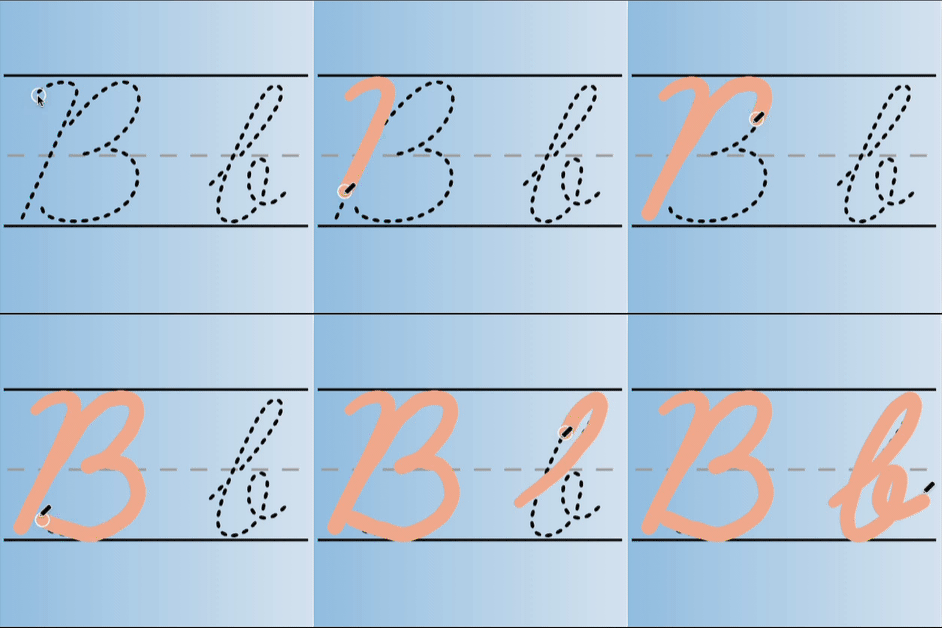
Practicing writing cursive letters like 'B' daily involves setting aside time each day to use worksheets, tracing guides, or animated tutorials. Consistent repetition helps develop muscle memory and improves your cursive writing skills effectively.
What is the history of the cursive alphabet?
The history of the cursive alphabet traces back to ancient Rome, evolving from the Latin script. It was designed for faster writing, gaining popularity in the Middle Ages and influencing modern cursive styles used today.
How do you connect letters in cursive?
Connecting letters in cursive involves using fluid, continuous strokes. Begin each letter with a slight upward curve, then smoothly transition into the next letter, ensuring that the end of one letter flows into the beginning of the next.
How do I write the cursive letter a correctly?
Writing the cursive letter 'a' correctly involves starting with a small loop at the top, then creating a rounded shape that flows smoothly into a downward stroke before finishing with a slight upward flick. Practice this motion to achieve fluidity.
Are cursive letters still taught in modern schools?
Cursive letters are still taught in some modern schools, although their emphasis has decreased due to the rise of digital communication and printing. Many educators recognize the value of cursive writing for fine motor skills and personal expression.
What is the history behind cursive lettering?
The history behind cursive lettering is rooted in the need for faster writing methods, evolving from ancient scripts to the fluid, connected style we recognize today. It gained prominence in the 16th century, particularly in Europe, as a preferred form for personal correspondence.
Why is cursive writing important in education?
Cursive writing is important in education because it enhances fine motor skills, promotes cognitive development, and encourages creativity. Mastering cursive also aids in reading fluency and fosters a personal connection to writing.
What are the benefits of learning the cursive alphabet?
The benefits of learning the cursive alphabet include improved handwriting speed and fluidity, enhanced fine motor skills, and a deeper connection to traditional writing methods, which can foster creativity and personal expression.
Can I write my signature with a cursive capital B?
You can definitely write your signature with a cursive capital B. Many people choose cursive styles for their signatures, and a cursive capital B can add a personal touch to your signature.
How do I connect cursive letters when writing?
Connecting cursive letters when writing involves using smooth, continuous strokes. Begin each letter at the end of the previous one, ensuring that the tails of letters flow seamlessly into the next letter's starting point for a fluid appearance.
How do I write a cursive B with good hand positioning?
Writing a cursive 'B' with good hand positioning involves holding your pen lightly, with your fingers resting comfortably on the grip. Start with a smooth upward stroke, curving into the loop, and then finish with a downward flourish.
What is the correct way to write a cursive letter B?
The correct way to write a cursive letter B involves starting with a loop at the top, followed by a downward stroke that curves into a rounded bottom. Practice this motion to achieve fluidity and elegance in your cursive writing.
How can cursive letters enhance handwriting skills?
Cursive letters can enhance handwriting skills by promoting fluidity and speed in writing. The continuous flow of cursive encourages better hand coordination and muscle memory, resulting in more legible and aesthetically pleasing handwriting.
What techniques improve cursive writing speed?
Techniques to improve cursive writing speed include practicing regularly with timed exercises, maintaining a relaxed grip on the pen, using fluid wrist movements, and focusing on consistent letter connections.
How does cursive writing aid memory retention?
Cursive writing aids memory retention by engaging multiple cognitive processes, enhancing motor skills, and promoting deeper understanding of letter formation, which collectively improve recall and retention of information.
What resources help learn cursive effectively?
Effective resources for learning cursive include online tutorials, downloadable worksheets, instructional videos, and practice guides. These tools provide structured guidance and hands-on practice to enhance cursive writing skills.
How can I teach cursive writing to children?
Teaching cursive writing to children involves using engaging resources like worksheets, instructional videos, and practice exercises. Start with simple letters, providing clear demonstrations, and encourage regular practice to build their confidence and skill.
What are common challenges in learning cursive?
Common challenges in learning cursive include difficulty with letter formation, maintaining consistent slant and spacing, and transitioning from print to cursive writing. These issues can hinder fluency and legibility, making practice essential for improvement.
How does cursive writing differ from print?
Cursive writing differs from print in that it connects letters in a flowing manner, allowing for faster writing, while print consists of separate, distinct letters. This fluidity enhances the aesthetic appeal and personal touch of handwritten communication.
What are the best practices for cursive writing?
The best practices for cursive writing include maintaining a consistent slant, using smooth, flowing strokes, and practicing regularly with worksheets. Focus on proper letter formation and spacing to enhance readability and style.
How can I improve my cursive letter formation?
Improving your cursive letter formation involves consistent practice, using guided worksheets, and focusing on proper hand positioning. Regularly reviewing animated tutorials can also enhance your technique and fluidity in writing.
What tools assist in practicing cursive writing?
The tools that assist in practicing cursive writing include worksheets, instructional videos, and writing guides. These resources help learners improve their cursive skills through structured practice and visual demonstrations.
How does cursive writing benefit fine motor skills?
Cursive writing benefits fine motor skills by enhancing hand-eye coordination and finger dexterity. The fluid motion required for cursive letters helps strengthen the small muscles in the hands, improving overall writing proficiency and control.
What are the key features of cursive letters?
The key features of cursive letters include their flowing, connected strokes, which enhance readability and speed in writing. They often have a graceful appearance, with loops and curves that distinguish them from print letters.